You are somebody’s everything.
You manage medications, doctor’s appointments, meals, moods, and moments. You anticipate needs before they’re spoken and solve problems before they become crises. You show up — every single day — for someone you love.
And somewhere along the way, you stopped showing up for yourself.
I get it. I really do. Because I’ve been there. And what pulled me back — quietly, consistently, one piece at a time — was a jigsaw puzzle.
My Unlikely Sanctuary
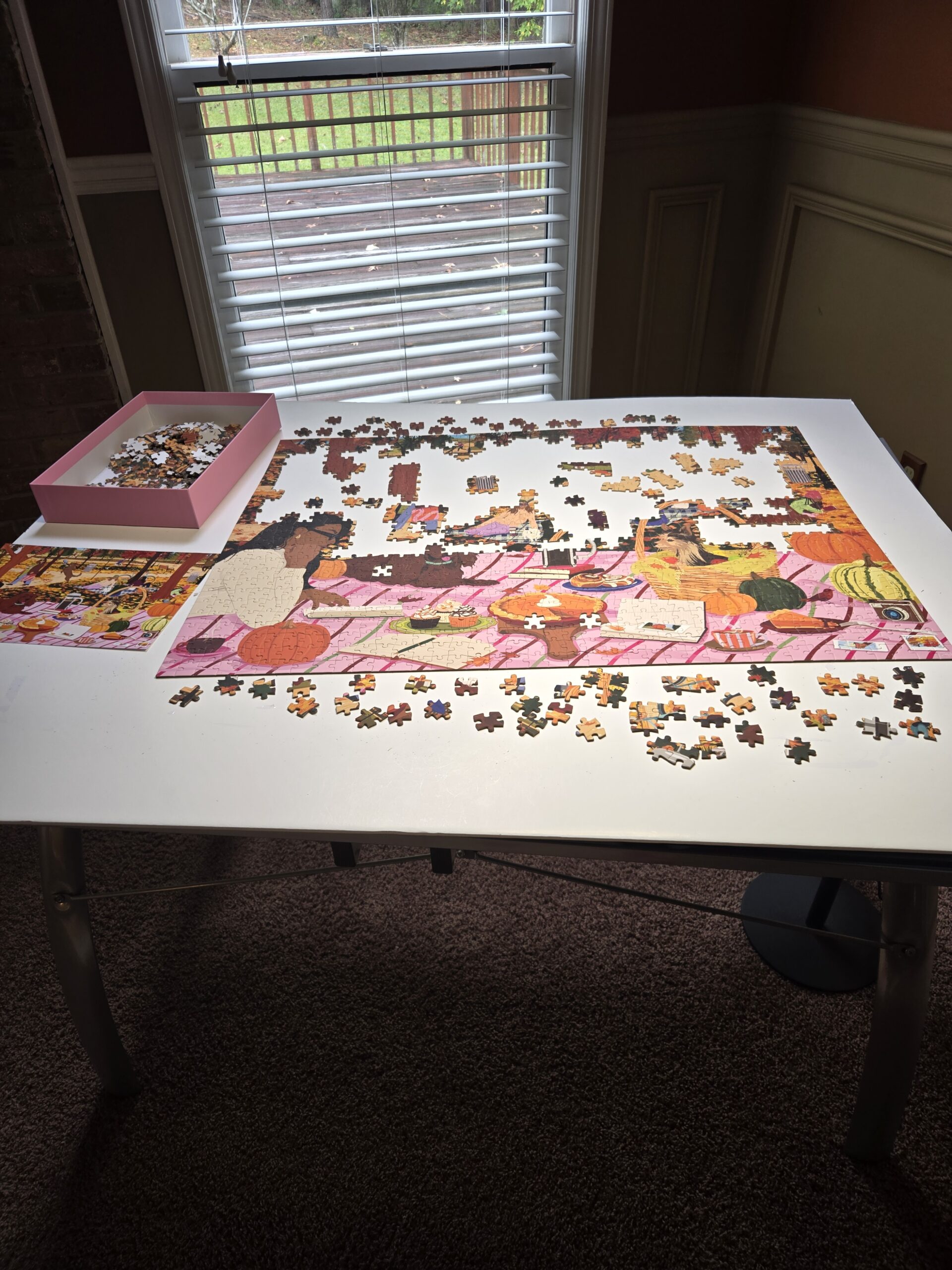
Long before I launched a puzzle company, I was just a woman sitting at a table, staring at 500 pieces of what would eventually become a garden scene or a Paris street or a cozy autumn cabin. I wasn’t thinking about what needed to be done. I wasn’t worrying about tomorrow. I was just looking for the edge pieces.
Puzzles have carried me through some of the hardest seasons of my life. When everything around me felt chaotic and uncertain, the puzzle on my table was the one thing I could control. I could make progress. I could finish something. And when that last piece clicked into place, I felt it — a quiet, real sense of accomplishment that nobody could take from me.
That feeling? Every caregiver deserves it.
What a Hobby Actually Does For You
A hobby isn’t a luxury. It’s maintenance.
Research backs this up. Engaging in a regular hobby has been shown to reduce cortisol (your stress hormone), lower blood pressure, improve sleep, and reduce symptoms of anxiety and depression. For caregivers — who experience burnout at significantly higher rates than the general population — a hobby isn’t optional. It’s protective.
Here’s what happens when you give yourself even 20–30 minutes of something you genuinely enjoy:
- Your nervous system gets a break. Caregiving keeps your brain in a constant state of alertness. A hobby interrupts that cycle and tells your body it’s safe to relax.
- You remember who you are. It’s easy to lose yourself in the caregiver role. A hobby reminds you that you are a whole person with interests, skills, and passions that exist outside of caregiving.
- You become a better caregiver. This isn’t ironic — it’s science. People who take regular mental breaks are more patient, more present, and more emotionally available. Rest makes you better, not worse.
It Doesn’t Have to Be Puzzles
Maybe your thing is gardening. Or painting. Or reading novels that have nothing to do with anything practical. Maybe it’s baking, or knitting, or taking photographs of things that make you smile.
It doesn’t matter what it is. What matters is that it’s yours — something that asks nothing of you except your attention, and gives you back something you can’t get anywhere else.
The only rule? It has to bring you joy. Not productivity. Not usefulness. Just joy.
A Short Break Still Counts
You don’t need a weekend away or a week-long vacation (though you deserve those too). You need Tuesday evening with the puzzle. You need Saturday morning with the garden. You need fifteen minutes that belong entirely to you.
Give yourself permission to have a hobby. Not when things calm down. Not when your person gets better. Not someday.
Now.
You have been caring for someone else long enough. It’s time to take care of you too.
Beverly Nance is the founder of Take Care Time, a bi-monthly respite subscription box for caregivers, and the host of Take Care Time: The Tales and Exhales of Caregivers. She believes caregivers deserve to be cared for too.